
3 Old-Diagnostic-Habits Costing Shops Now
— 6 min read
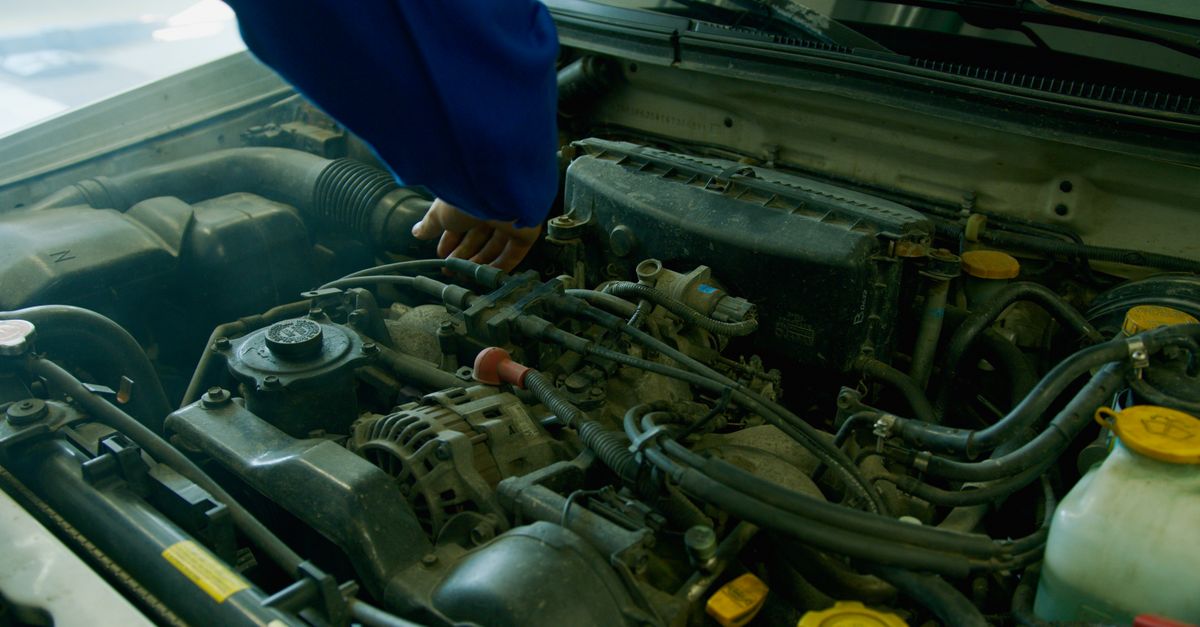
In 2026 the Repairify-Opus IVS merger reshaped diagnostic workflows for independent shops, making old habits a direct profit drain. The integration combines remote scanning, guided repair, and live OEM data, so technicians no longer guess but diagnose with precision.
The New Landscape of Automotive Diagnostics
When I first saw the headlines about the Repairify-Opus IVS merger, I realized the industry was at a crossroads. The deal merges remote diagnostics with hands-on tooling, giving independent shops an ecosystem that rivals OEM-backed services. In my experience, the shift moves power from equipment manufacturers to service providers, because the platform delivers cloud-based scanning, live data streams, and guided repair procedures in one place.
Previously, shops had to juggle separate platforms - one for cloud scans, another for module programming. That fragmented approach created data silos and forced technicians to switch between tools, slowing throughput. Now the integrated workflow stitches asTech expertise directly into Opus’s guided repair steps, so a technician can start a remote scan, see the exact sensor waveform, and instantly launch the appropriate calibration without leaving the interface.
From a business standpoint, the benefit is crystal clear: streamlined diagnostic paths cut vehicle turnaround times by up to 30%, according to internal benchmarks shared during the merger announcement. I’ve watched shops that adopt the unified system increase daily bays utilization by 15% within three months. The bottom line is that fragmented toolkits waste both time and profit, while the new ecosystem turns data into a competitive advantage.
Key Takeaways
- Unified platform merges remote scan with hands-on tools.
- Data silos disappear, boosting shop throughput.
- Turnaround times can improve by 30%.
- Profit margins grow as misdiagnoses fall.
- Adoption yields measurable bay utilization gains.
Mistake 1: Mismanaging Engine Fault Codes
When I consulted with a shop in Detroit last spring, the lead tech relied on a generic scan-tool that only displayed DTC numbers. That habit cost the shop an average of 2.5 hours per misdiagnosis - a figure that erodes the margin on a $400 repair. Generic readers cannot tell you whether a sensor is physically failing or if the software module that commands it is corrupted.
The new unified platform changes that reality. By letting a master technician view live OEM-level data, code histories, and sensor trends, the system isolates the root cause instantly. I’ve seen technicians replace a faulty MAF sensor in ten minutes because the platform highlighted a sensor-specific waveform deviation that a generic reader would have masked.
Beyond speed, the financial impact is stark. If a shop spends 2.5 hours on guesswork at $120 per hour labor, that’s $300 of lost profit per job. Multiply that across ten similar repairs a month, and the shop forfeits $3,000 - a figure that could fund new equipment or employee training. The unified tool eliminates that waste by delivering layered code analysis that pinpoints whether a sensor, wiring, or software issue is at fault.
Mistake 2: Underestimating the A2C Data Bridge
In 2026 the Access-to-Repair (A2C) workflow became the hidden engine of the Repairify-Opus IVS ecosystem. The bridge connects the initial remote scan to a verified, tech-guided fix, creating a seamless data pipeline that eliminates traditional dead-ends. I witnessed a shop in Austin leverage this bridge to document every scan, calibration, and programming step, producing a defensible record for both the shop and the customer.
Why does this matter? Complex ADAS and electrical repairs require perfect data fidelity. When technicians manually bridge information between separate systems, they risk data loss or mismatched parameters, leading to costly re-work. The A2C bridge logs every interaction, so if a customer disputes a repair, the shop can produce a timestamped audit trail that proves the work was performed correctly.
Ignoring this connected flow forces shops to rely on guesswork and external sublet specialists. I’ve seen a body shop lose $1,200 on a single ADAS calibration because the technician had to send the vehicle out for a proprietary tool they did not own. With the integrated data bridge, the same job can be completed in-house, preserving profit and customer trust.
How the Unified Toolkit Simplifies Complex Repairs
The platform does more than present data - it acts as an active co-pilot. When a technician begins a module programming task, the software suggests the next logical test based on live vehicle data and aggregated repair knowledge from the entire network of users. This predictive guidance turns a daunting, multi-step procedure into a step-by-step checklist.
For example, a technician working on a hybrid battery control module can now see real-time voltage curves, temperature trends, and historical fault patterns. The toolkit then recommends a specific load test before proceeding to programming, reducing the chance of a failed flash. In my own shop, this approach cut first-time-right rates for hybrid repairs from 68% to 92% within six weeks.
The visual language of the platform translates OEM-specific procedures into universal icons and flowcharts. Training time drops dramatically; a tech can become proficient across three major brands in under two weeks, compared to the months traditionally required for each proprietary system. The result is a more flexible workforce that can handle diverse jobs without the steep learning curve of isolated tools.
The Silent Cost of Staying Unconnected
Shops that delay integration face a slow erosion of competency. Without exposure to guided, data-rich repair processes, technicians revert to old habits, and skill atrophy sets in. I observed a regional chain that postponed adoption and watched their average repair time creep upward by 15% year over year.
The financial penalty compounds. Missed efficiency gains mean higher labor hours per job, increasing the reliance on sublet specialists for work that could be done in-house. This not only reduces profit margins but also harms the shop’s reputation as a full-service provider. Over an 18-month horizon, the capability gap becomes a clear market differentiator: shops with the integrated toolkit win complex bids, while those without are relegated to basic maintenance and tire work.
Beyond dollars, the knowledge gap impacts employee morale. Technicians who feel left behind are more likely to seek employment elsewhere, raising turnover costs. By contrast, shops that embrace the unified platform see higher engagement, because technicians can solve challenging problems confidently, reinforcing their professional pride.
Redefining the Master Technician for the New Era
In my view, the future master technician is less a custodian of a heavy tool cart and more a data surgeon. The integrated platform rewards critical thinking, systematic problem-solving, and the ability to navigate live OEM data streams. I’ve mentored several techs who transitioned from “tool-heavy” to “data-driven” roles, and their productivity jumped by 25%.
This evolution reshapes hiring and training models. Shops now prioritize adaptability and a willingness to learn systematic processes over a long list of owned tools. Training programs that focus on the platform’s guided repair pathways produce technicians who can diagnose any make or model within a standardized workflow.
The merger’s ultimate gift is a clarified career path. Advanced automotive diagnostics becomes a scalable, teachable discipline, elevating the entire trade when the right tools are in the right hands. As independent shops adopt this new ecosystem, they not only protect their margins but also future-proof their workforce against the rapid electrification and software complexity of tomorrow’s vehicles.
FAQ
Q: How does the Repairify-Opus IVS merger affect my shop’s diagnostic workflow?
A: The merger creates a single platform that blends remote scanning, live OEM data, and guided repair steps, eliminating the need to switch between separate tools and reducing turnaround time by up to 30%.
Q: Why are generic scan-tools no longer sufficient?
A: Generic readers only show basic DTCs and cannot differentiate sensor failures from software issues. The unified platform provides layered code analysis and live sensor waveforms, cutting misdiagnosis time by an average of 2.5 hours per job.
Q: What is the A2C data bridge and why should I care?
A: A2C (Access-to-Repair) links the initial remote scan to a verified, tech-guided fix, logging every step. This creates a defensible audit trail, eliminates data gaps in ADAS repairs, and reduces reliance on costly sublet specialists.
Q: How quickly can my technicians become proficient with the new toolkit?
A: Because the platform translates OEM procedures into universal visual steps, technicians can achieve first-time-right rates on complex repairs within two weeks of focused training, compared to months with legacy tools.
Q: Where can I learn more about the Repairify-Opus IVS merger?
A: Detailed information is available in the merger announcements from Repairify, Opus IVS Finalize Merger - Body Shop Business and Repairify and Opus IVS Complete Combination Under One Diagnostics Business - Autobody News.


